Latest Modular Kitchen Trends in Jodhpur by Pragya Singh Architects

A kitchen in Jodhpur has to do more than look beautiful. It must handle dry heat, dust, hard water, compact urban layouts, festive cooking, everyday family meals, and the need for smart storage in every corner. That is why the best modular kitchens today are not copied from glossy catalogues. They are planned around climate, cooking habits, movement, materials, and long-term ease of use.
Pragya Singh Architects looks at modular kitchens as a balance of function, warmth, and local character. The goal is not to create a kitchen that feels over-designed. The goal is to create a kitchen that works smoothly every morning, stays practical through the years, and still feels like part of a Jodhpur home.
The latest modular kitchen trends in Jodhpur by Pragya Singh Architects show a clear shift towards calm colours, durable finishes, hidden storage, efficient layouts, and design details that respect Rajasthan’s architectural mood without making the kitchen feel heavy or old-fashioned.

Jodhpur kitchens are becoming warmer, calmer, and more practical
Many homeowners once chose bold laminates, glossy shutters, and heavy decorative panels because they felt new and modern. That trend is fading. Kitchens now feel more refined, with finishes that look good in natural light and do not show every fingerprint or dust mark.
In Jodhpur, this matters. The city’s dusty, dry climate makes very glossy surfaces harder to maintain. Matte and satin finishes are gaining favour because they feel elegant and are easier to live with.
Popular colour directions include:
Sandstone beige
Warm grey
Soft ivory
Muted terracotta
Olive green
Charcoal used in small doses
Natural wood tones
These colours work well with Jodhpur’s light. They also pair beautifully with flooring, carved details, lime plaster walls, or traditional furniture that many homes already have.
The newer approach is not plain minimalism. It is warm minimalism. The kitchen stays simple, but not cold. A fluted glass cabinet, a brass handle, a textured backsplash, or a wooden breakfast ledge can add enough detail without making the space look crowded.
Layouts now start with movement, not modules
A modular kitchen is only successful if the layout makes cooking easier. The best-looking cabinets cannot fix a poorly planned work triangle. In Indian homes, the classic sink, hob, and refrigerator triangle still matters, but the design also has to account for extra activities.
A Jodhpur kitchen often supports:
Daily tea and breakfast routines
Full Indian meals with multiple dishes
Roti preparation
Pickle, papad, and dry snack storage
Festival cooking
Help from more than one person at a time
Water purifier and utility needs
That is why planning starts with movement.
L-shaped kitchens remain a strong choice
L-shaped kitchens suit many apartments and independent homes. They use two walls, leave floor space open, and allow a small dining counter or movable island if the room size supports it.
This layout works well when the sink and hob sit on separate arms of the L. It gives enough counter space for prep and plating. Tall units can be placed at one end so they do not interrupt the main cooking zone.
Parallel kitchens are ideal for serious cooking
Parallel kitchens are practical for homes where cooking is frequent and storage needs are high. One side can hold the hob and prep counter, while the opposite side can hold the sink, appliances, and pantry storage.
The key is keeping enough walking space between both counters. If the passage becomes tight, the kitchen feels stressful. If it is planned well, a parallel kitchen becomes one of the most efficient layouts for Indian cooking.
Island kitchens need space and discipline
Kitchen islands look beautiful, but they need generous clearance. In Jodhpur villas and larger homes, islands can work well as breakfast counters, prep stations, or family gathering points.
For compact spaces, a peninsula is often more practical. It gives the feel of an island while staying fixed to one wall or cabinet run.
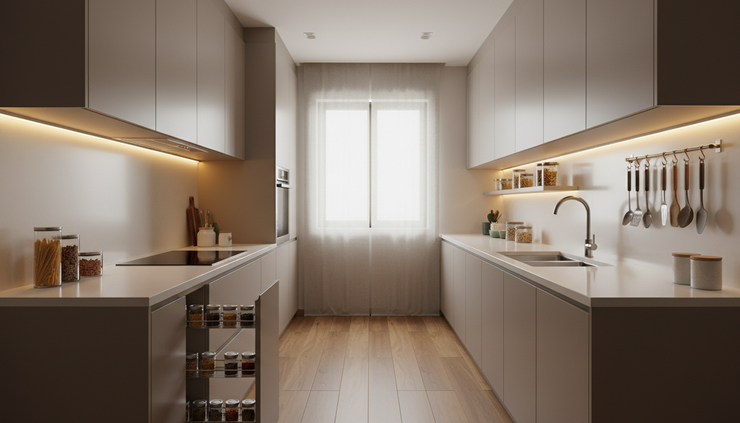
Storage is becoming smarter and more customised
The biggest advantage of modular kitchen design is not just appearance. It is storage. Newer kitchens in Jodhpur are being planned with a place for everything, from heavy cookware to small spice jars.
Instead of filling the kitchen with basic shelves, designers now use storage systems that match the way the family cooks.
Common smart storage ideas include:
Tall pantry units for groceries
Tandem drawers for dry goods
Deep drawers for kadais and pressure cookers
Corner carousel units for hard-to-reach spaces
Bottle pull-outs near the hob
Cutlery trays with adjustable sections
Vertical tray storage for thalis and baking sheets
Appliance garages for mixers and toasters
A well-designed drawer is often more useful than a deep shelf. With drawers, nothing disappears into the back. Heavy items also become easier to lift and access.
Dedicated zones reduce daily clutter
Modern kitchens work better when storage follows zones. The cooking zone should hold oils, spices, pans, and utensils. The cleaning zone should hold waste bins, dishwashing supplies, and cleaning cloths. The prep zone should hold knives, chopping boards, bowls, and dry ingredients.
This sounds simple, but it changes daily use. When everything sits close to where it is used, the kitchen stays cleaner and cooking feels less tiring.
Hidden storage keeps the kitchen calm
Open shelves look attractive in photographs, but they collect dust quickly. In Jodhpur, closed storage is usually more practical. A few open shelves can display ceramics, brassware, or plants, but most storage should stay behind shutters or glass.
Fluted glass is a good middle path. It lightens the kitchen visually, hides small clutter, and adds texture.
Materials are being chosen for heat, dust, and daily use
A kitchen in Rajasthan needs finishes that can handle rough use. The right material choice saves maintenance headaches later.
Matte laminates and acrylics are practical choices
Laminate remains popular because it is cost-effective, available in many finishes, and suited to Indian cooking. Matte laminates in stone, wood, and solid colours are especially popular.
Acrylic gives a richer look, but high-gloss acrylic may show fingerprints more easily. For busy kitchens, satin acrylic or anti-fingerprint finishes can be more practical.
Quartz countertops are gaining preference
Granite has long been trusted in Indian kitchens. It is strong and familiar. Quartz is now popular because it gives a cleaner, more uniform look. It suits modern kitchens where homeowners want soft colours and fewer visual breaks.
For Jodhpur homes, a light quartz counter can brighten the room. A darker counter can work well if the cabinets are pale and the kitchen gets enough daylight.
Backsplashes are becoming design features
The backsplash is no longer treated as an afterthought. It can set the character of the kitchen.
Trending options include:
Large-format tiles with fewer joints
Handmade-look tiles
Stone-finish ceramic tiles
Back-painted glass in muted colours
Quartz or stone continuing from the countertop
Subtle geometric patterns
For easy cleaning, large-format tiles or counter-to-backsplash quartz are strong options. They reduce grout lines and make oil splashes easier to wipe.

Local character is returning in subtle ways
Modern modular kitchens do not need to look the same everywhere. In Jodhpur, the most interesting trend is the return of local references in a restrained way.
Instead of heavy carved panels everywhere, designers are using smaller cues from Rajasthan’s architecture and crafts.
These may include:
Arched open niches
Sandstone-inspired colour palettes
Brass or antique gold hardware
Cane or rattan inserts
Jali-inspired cabinet details
Handmade tiles
Lime-wash style wall textures near dining zones
Wooden breakfast counters with natural grain
The result feels rooted without becoming themed. A kitchen can be modern and still belong to Jodhpur.
Blue accents can work when used carefully
Jodhpur is closely associated with blue homes, but a full blue kitchen can feel intense. A smarter way to use blue is through accents.
For example, deep blue lower cabinets with ivory upper cabinets can look elegant. Blue tiles behind the hob can also add identity without overwhelming the space. A blue niche or crockery unit near the dining area is another subtle option.
The key is balance. Blue works best when paired with warm neutrals, wood, stone, or brass.
Lighting is now part of the design, not an add-on
A kitchen cannot rely only on one ceiling light. Good lighting makes cutting, cooking, and cleaning safer and easier. It also changes the mood of the space.
A well-planned modular kitchen uses layers of light.
Task lighting belongs under the wall cabinets
Under-cabinet lighting is one of the most useful additions. It lights the countertop directly and removes shadows while cooking. Warm white or neutral white light works well for most homes.
Ambient lighting softens the room
Ceiling lights, recessed lights, or pendant lights create general brightness. Pendant lights over an island or breakfast counter can make the kitchen feel more connected to the dining area.
Accent lighting adds depth
Soft lighting inside glass cabinets or open niches can highlight beautiful crockery or decor. It should be used sparingly. Too much accent lighting can make a kitchen feel like a showroom rather than a home.
Appliances are being built into the plan
Earlier, many homes selected appliances after the kitchen was nearly complete. That often created awkward corners, exposed wires, and counters crowded with machines.
Now appliances are planned early.
Common built-in or planned appliances include:
Microwave
OTG or built-in oven
Dishwasher
Chimney
Hob
Refrigerator
Water purifier
Mixer and small appliance zone
In Jodhpur, a good chimney is especially useful because Indian cooking often involves tadka, frying, and spices. The chimney should match the size of the hob and the cooking style. Ducting should be planned neatly so it does not spoil the design.
The refrigerator also needs careful placement. It should be easy to access without disturbing someone at the hob. If the kitchen opens into a living or dining space, the fridge should not dominate the first view.
Open kitchens are popular, but they need careful planning
Open kitchens are becoming common in apartments and modern homes. They help the kitchen connect with the living and dining areas. This suits families who like casual conversations while cooking.
Still, open kitchens need discipline in design.
Since the kitchen is visible, the storage must be better planned. Counters should not become dumping areas. A breakfast counter or peninsula can create a gentle boundary between cooking and living spaces.
For Indian cooking, ventilation becomes very important. A strong chimney, cross-ventilation, and easy-to-clean surfaces help keep the open layout practical.
Semi-open kitchens offer a smart middle path
A semi-open kitchen works well for many homes in Jodhpur. It can include a sliding glass partition, a half wall, or a framed opening. This allows visual connection while controlling smoke, sound, and clutter.
This approach suits homeowners who like openness but still want the kitchen to feel contained during heavy cooking.

Sustainability is shaping material and space choices
Sustainable kitchen design does not always mean expensive materials. It often means choosing durable finishes, reducing waste, improving ventilation, and planning for long life.
A kitchen that needs fewer repairs is already a more responsible choice.
Useful decisions include:
Choose good-quality hardware for drawers and shutters
Use durable countertops that do not need frequent replacement
Plan natural light wherever possible
Keep waste segregation space inside the cabinet
Use LED lighting
Select finishes that are easy to clean without harsh chemicals
Avoid unnecessary decorative elements that may age quickly
Water use also matters. A well-planned sink area, good plumbing access, and space for a purifier can make the kitchen easier to maintain. In homes affected by hard water, material selection around the sink should be especially practical.
Details that make a modular kitchen feel premium
Luxury in a kitchen is not only about expensive finishes. It often comes from quiet details that improve daily use.
Some details worth planning include:
Soft-close drawers and shutters
Handleless or slim-profile handles
Skirting that is easy to clean
Rounded counter edges in family homes
Anti-skid flooring
Charging points near the breakfast counter
Tall storage for brooms and cleaning tools
A planned spot for wet and dry waste
Ventilated storage for onions and potatoes
Easy access to plumbing for future repairs
These details do not always stand out in photographs, but they decide how the kitchen feels after six months of use.
What Pragya Singh Architects focuses on while planning a Jodhpur kitchen
A good modular kitchen begins with questions. How many people cook? Is the kitchen used for heavy Indian cooking every day? Are there children or elderly family members at home? Does the family need a breakfast counter? Does the kitchen need to connect with the dining space? How much storage is needed for grains, utensils, and appliances?
Pragya Singh Architects places these practical questions before the visual style. Once the function is clear, the material palette, lighting, and detailing can follow naturally.
The design direction usually rests on four ideas:
Comfort
Durability
Beauty
Local relevance
The layout should reduce unnecessary movement and support daily routines.
Materials should suit Jodhpur’s climate, dust, and cooking patterns.
Colours, textures, and details should feel calm and personal.
The kitchen should respect the home’s setting, not feel imported from somewhere else.
This is where modular design becomes more than a set of cabinets. It becomes a tailored system for the home.
Choosing the right trend for your home
Not every trend belongs in every kitchen. A dark kitchen may look dramatic, but it needs good light. An island may look premium, but it needs space. Open shelves may look charming, but they need regular cleaning. Handleless shutters may look sleek, but some families prefer visible handles for ease.
The best kitchen is the one that fits the way the home is used.
Before finalising a modular kitchen, it helps to think through:
How often the kitchen is used
What type of cooking happens most
How many people need to move inside at once
What needs to stay hidden
What should be easy to reach every day
How much natural light enters the space
Whether the kitchen should be open, semi-open, or closed
Which materials will be easy to maintain over time
Trends can guide decisions, but habits should lead them.
A modern Jodhpur kitchen should feel effortless
The strongest trend in modular kitchens today is not one colour, one finish, or one layout. It is the move towards thoughtful design. Kitchens are becoming calmer, better organised, easier to clean, and more connected to the home’s personality.
For Jodhpur, that means kitchens with warm materials, smart storage, layered lighting, climate-wise finishes, and subtle regional details. A well-designed modular kitchen should make everyday cooking feel simpler while giving the home a refined centre.
Pragya Singh Architects brings this approach into focus by treating the kitchen as a lived-in space, not just a visual feature. When layout, storage, material, and lighting work together, the result is a kitchen that looks current today and continues to feel right for years.


Comments